
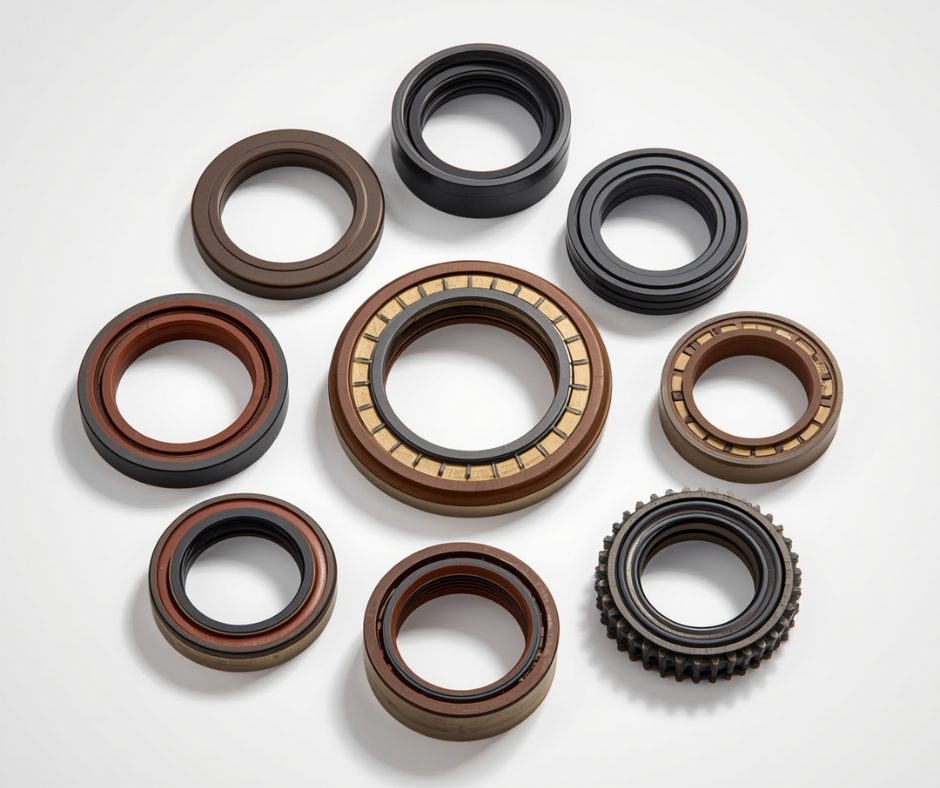
Understanding Hydraulic Seals: Types & Applications
Hydraulic seals are the unsung heroes of modern machinery. They enable hydraulic systems to function efficiently by containing pressurized fluid, preventing leaks, and keeping contaminants out. Without reliable hydraulic seals, construction equipment, manufacturing machinery, and automotive systems would fail to operate safely and effectively.
In this comprehensive guide, we'll explore the different types of hydraulic seals, their specific applications, material considerations, and how to select the right seal for your system.
💡 Key Insight: Hydraulic seal failure accounts for nearly 40% of all hydraulic system breakdowns. Proper seal selection and maintenance are essential for maximizing equipment uptime and reducing repair costs.
What Are Hydraulic Seals?
Hydraulic seals are specialized components designed to prevent fluid leakage between moving and stationary parts in hydraulic systems. They are essential for maintaining system pressure, ensuring efficient operation, and protecting internal components from contamination.
Unlike standard oil seals, hydraulic seals are engineered to withstand higher pressures (up to 5000+ PSI), extreme temperatures, and contact with aggressive hydraulic fluids. They must also accommodate dynamic motion—both linear and rotary—while maintaining a positive seal.
Key Functions of Hydraulic Seals
- Fluid Retention: Contain hydraulic fluid within the system under pressure.
- Contamination Exclusion: Prevent dirt, moisture, and debris from entering the system.
- Pressure Maintenance: Enable the system to build and maintain required pressure levels.
- Wear Protection: Reduce friction and wear between moving components.
Types of Hydraulic Seals
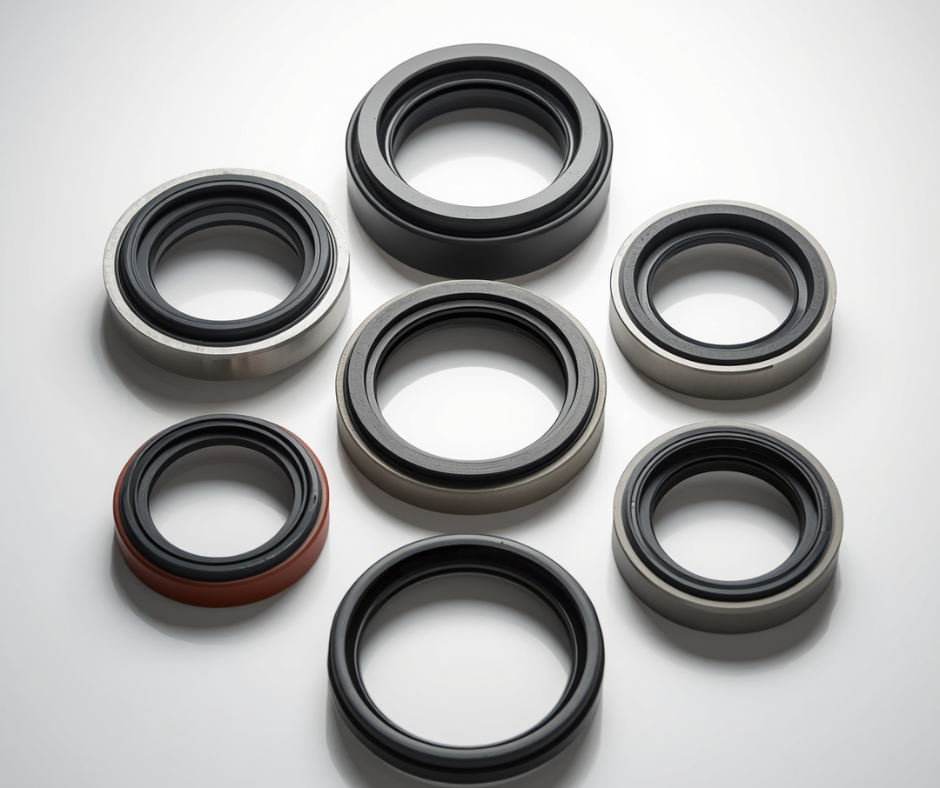
Hydraulic seals come in various types, each designed for specific applications and operating conditions. Here are the most common types:
1. Rod Seals (Piston Rod Seals)
Rod seals are used on the extending rod of a hydraulic cylinder. They prevent pressurized fluid from leaking out of the cylinder past the rod. These seals must handle high pressure on the inward stroke while maintaining sealing integrity during rod extension.
🔧 Common Rod Seal Materials: Polyurethane (PU), Nitrile (NBR), and PTFE are widely used for rod seals due to their excellent wear resistance and hydraulic fluid compatibility.
2. Piston Seals
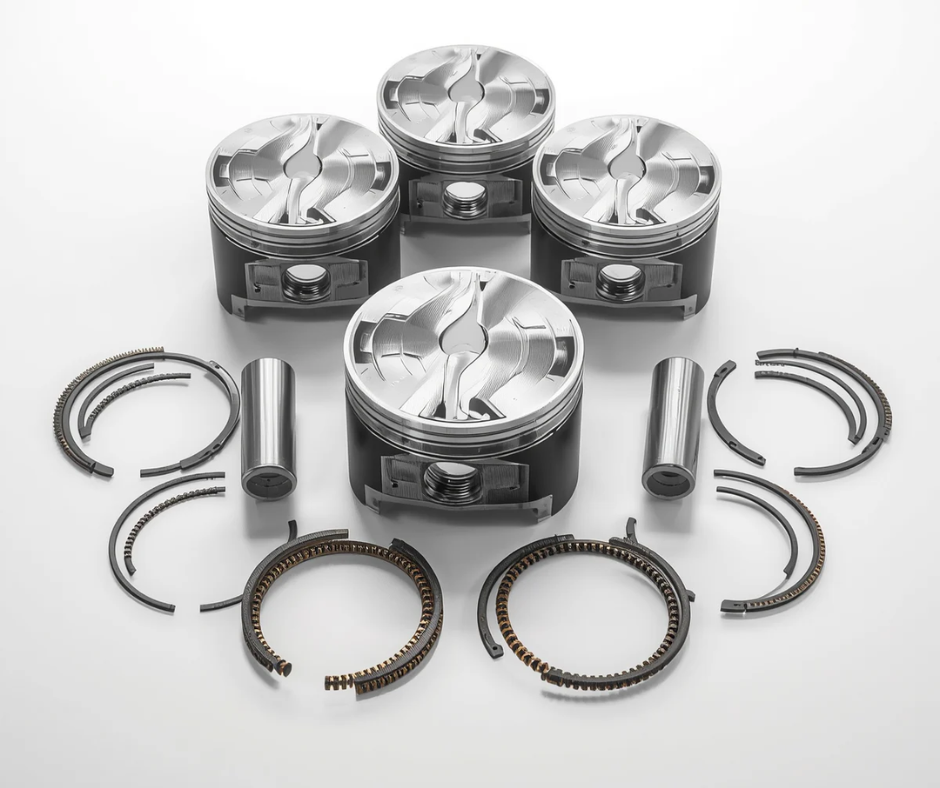
Piston seals are installed on the piston inside the hydraulic cylinder. They prevent fluid from leaking across the piston—from one chamber to the other. These seals are critical for maintaining pressure differentials and achieving precise cylinder movement.
- Single-acting: Seal only on one side (extension or retraction).
- Double-acting: Seal on both sides for bidirectional operation.
3. Wiper Seals (Scraper Seals)
Wiper seals are located at the outer end of the hydraulic cylinder. Their primary function is to scrape away dirt, moisture, and debris from the rod during retraction, preventing contaminants from entering the system.
4. Buffer Seals
Buffer seals, also called secondary rod seals, are installed behind the main rod seal to absorb pressure spikes and protect the primary seal from sudden pressure surges.
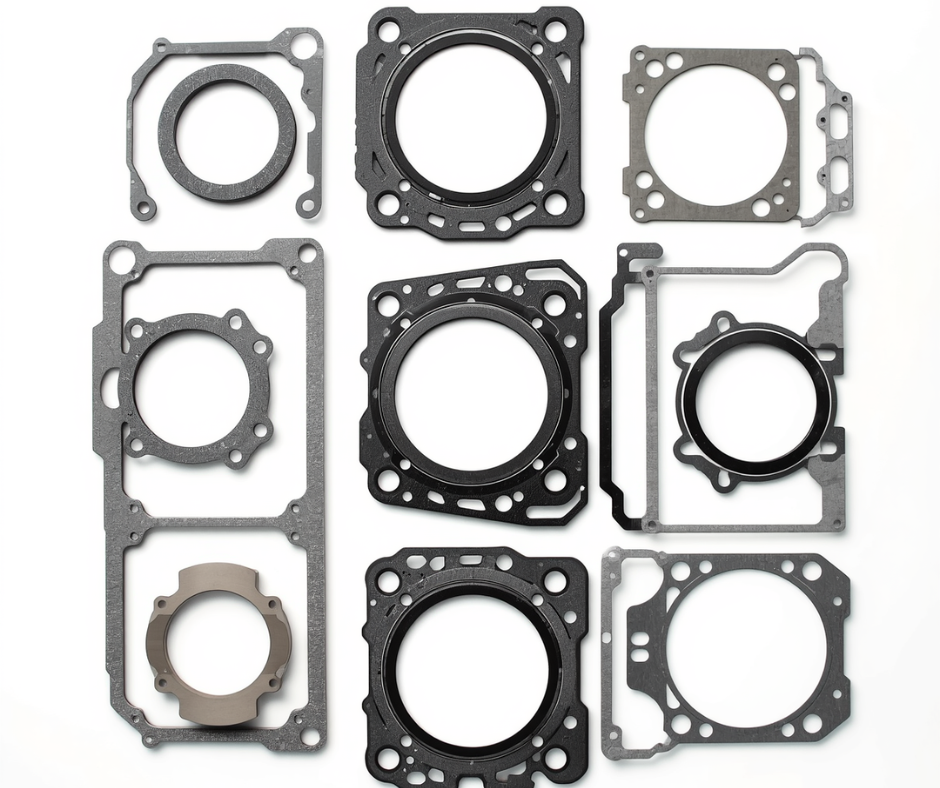
5. Rotary Seals
Rotary hydraulic seals are designed for applications with rotating shafts, such as hydraulic motors and pumps. They must accommodate rotational motion while sealing under pressure.
6. Back-up Rings
Back-up rings are rigid rings installed behind sealing elements to prevent extrusion in high-pressure applications. They are typically made from PTFE or nylon.
Hydraulic Seal Materials: A Comprehensive Guide
The choice of seal material is crucial to ensure compatibility with the hydraulic fluid, operating temperature, and application requirements.
| Material | Temperature Range | Best Applications | Limitations |
|---|---|---|---|
| Polyurethane (PU) | -40°C to +110°C | High-wear, high-pressure applications | Limited chemical resistance |
| Nitrile (NBR) | -40°C to +120°C | General-purpose, petroleum-based fluids | Poor ozone/weather resistance |
| PTFE | -200°C to +260°C | Chemical resistance, extreme temperatures | Low elasticity, requires energizing |
| FKM (Viton) | -20°C to +200°C | High temperatures, aggressive fluids | Higher cost |
| HNBR | -30°C to +150°C | High abrasion, ozone resistance | Moderate cost |
| EPDM | -40°C to +130°C | Water-based fluids, brake fluids | Poor petroleum fluid resistance |
Hydraulic Seal Selection Guide
Choosing the right hydraulic seal involves considering multiple factors. Follow this step-by-step approach:
Step 1: Identify the Seal Type
Determine which type of seal your application requires—rod seal, piston seal, wiper seal, etc. Consider the location and function within the hydraulic system.
Step 2: Assess Operating Conditions
- Pressure: What is the maximum operating pressure? Higher pressures require reinforced seal designs.
- Temperature: What are the minimum and maximum temperatures the seal will encounter?
- Speed: What is the linear or rotational speed of the moving component?
- Fluid Compatibility: What type of hydraulic fluid is being used?
Step 3: Choose the Material
Select a material that is compatible with the hydraulic fluid and capable of withstanding the operating temperature and pressure.
Step 4: Determine Correct Size
Accurately measure the rod diameter, bore diameter, and groove dimensions. Always consider surface finish requirements—smoother surfaces reduce friction and seal wear.
📐 Surface Finish Matters: For hydraulic seals, a surface finish of 0.2–0.4µm Ra is generally recommended. Too rough or too smooth can compromise seal performance.
Common Hydraulic Seal Failures & Prevention
✅ Prevention Tips
- Choose the correct seal material
- Maintain proper fluid cleanliness
- Ensure proper surface finish
- Use correct installation tools
- Monitor operating temperatures
- Regular system maintenance
❌ Common Failure Causes
- Incorrect seal selection
- Contaminated fluid
- Improper installation
- Pressure spikes
- Extreme temperatures
- Excessive wear
Signs of Hydraulic Seal Failure
- External Leaks: Visible fluid around the rod or cylinder body.
- Reduced Performance: Slower operation, reduced speed, or failure to maintain pressure.
- Increased Operating Temperature: Excessive friction can cause seal and fluid overheating.
- Noise: Unusual sounds like squealing or chattering from the cylinder.
- Contamination: Visible particles in the hydraulic fluid.
Installation Best Practices
Proper installation is essential for hydraulic seal longevity and performance:
- Inspect all components: Check the rod, cylinder bore, and grooves for burrs, scratches, or wear.
- Clean thoroughly: Ensure no dirt or debris is present on sealing surfaces.
- Lubricate: Apply a thin layer of compatible hydraulic fluid or assembly lubricant.
- Use proper tools: Avoid sharp tools that can damage the seal surface.
- Check orientation: Ensure seals are installed in the correct orientation (lip direction).
- Avoid twisting: Do not roll or twist the seal during installation.

Applications of Hydraulic Seals
Hydraulic seals are used in countless industries and applications:
- Construction Equipment: Excavators, bulldozers, cranes, and loaders.
- Agriculture: Tractors, harvesters, and irrigation systems.
- Manufacturing: Presses, injection molding machines, and conveyors.
- Automotive: Power steering, brake systems, and suspension.
- Aerospace: Landing gear, flight controls, and hydraulic actuators.
- Marine: Steering systems, winches, and deck machinery.
- Oil & Gas: Wellheads, valves, and drilling equipment.
Need Expert Help with Hydraulic Seals?
Selecting the right hydraulic seal is essential for maximizing equipment performance, reducing downtime, and controlling maintenance costs. Our team of experienced engineers can help you choose the ideal sealing solution for your specific application—whether it's a standard off-the-shelf seal or a custom-engineered design.
📞 Call us: +971 5037 56766
✉️ Email: hasnain@hamzaoilseals.com
Request a Quote →