
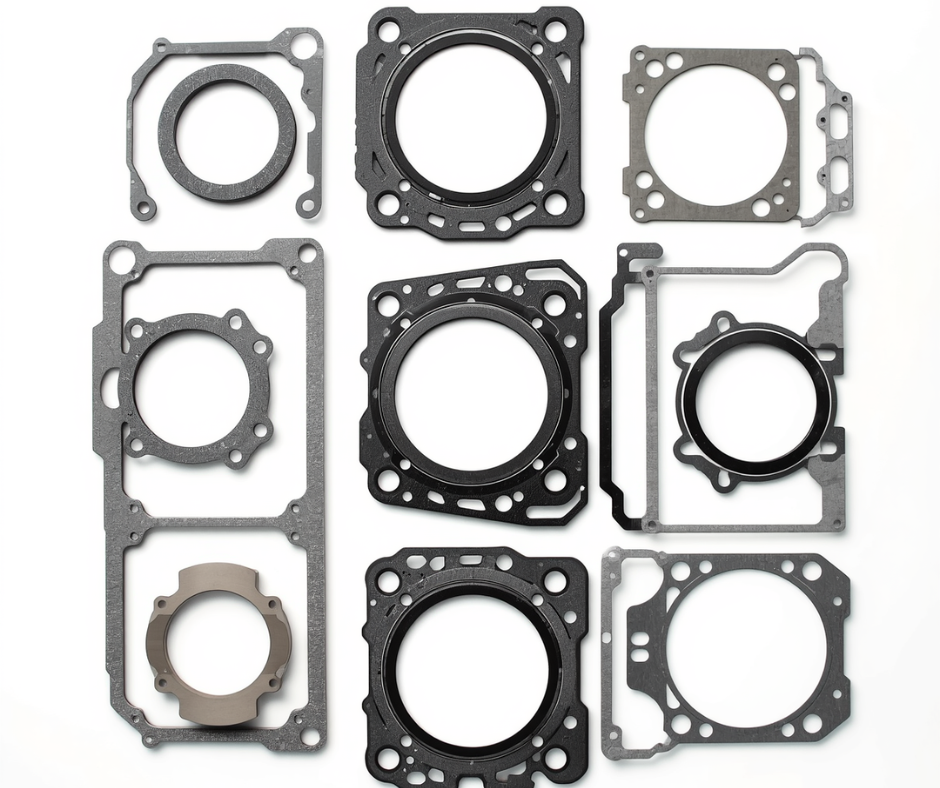
How to Choose the Right Gasket Material
Gaskets are one of the most critical yet often overlooked components in industrial and automotive applications. They create a leak-proof seal between two surfaces, preventing fluid or gas from escaping and contaminants from entering. Choosing the wrong gasket material can lead to leaks, equipment failure, costly downtime, and even safety hazards.
With the wide variety of gasket materials available today—from traditional rubber to advanced composites and metals—selecting the right one can be challenging. This comprehensive guide will help you understand the key factors in gasket material selection and identify the best material for your specific application.
💡 Key Insight: Studies show that up to 80% of gasket failures are due to improper material selection rather than manufacturing defects. Taking the time to choose the right material from the start can significantly extend the life of your equipment.
What Are Gaskets and Why Do They Matter?
A gasket is a mechanical seal that fills the space between two or more mating surfaces, designed to prevent leakage of fluids or gases while maintaining the integrity of the system. Gaskets are used in virtually every industry—from automotive engines and industrial piping to food processing and aerospace applications.
The right gasket material must withstand the operating conditions it will face, including temperature, pressure, fluid exposure, and mechanical stress.
Key Gasket Functions
- Prevent Leakage: Seal fluids and gases within the system.
- Exclude Contaminants: Keep dirt, moisture, and debris out.
- Compensate for Imperfections: Fill surface irregularities between mating parts.
- Withstand Pressure: Maintain seal integrity under pressure.

Key Factors in Gasket Material Selection
Before selecting a gasket material, consider these critical factors:
1. Temperature
What are the minimum and maximum temperatures the gasket will experience? Consider both the operating temperature and any potential temperature spikes.
2. Pressure
What is the maximum system pressure? Higher pressures require materials with better creep resistance and higher compressive strength.
3. Chemical Compatibility
What fluids or gases will the gasket be exposed to? The material must be chemically resistant to prevent degradation, swelling, or dissolution.
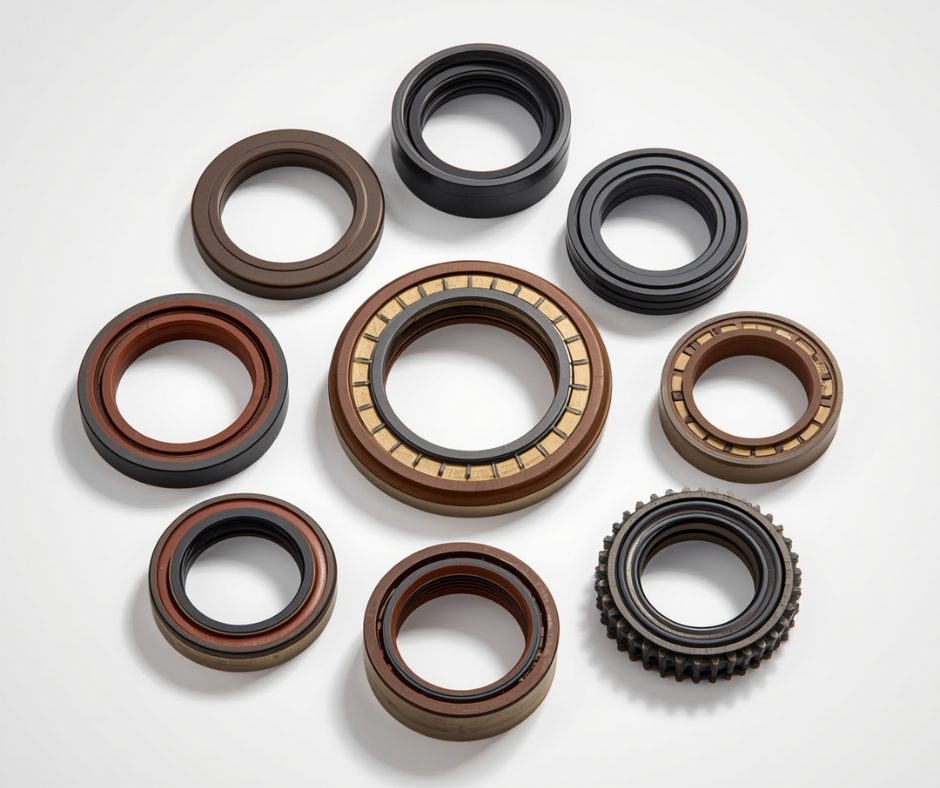
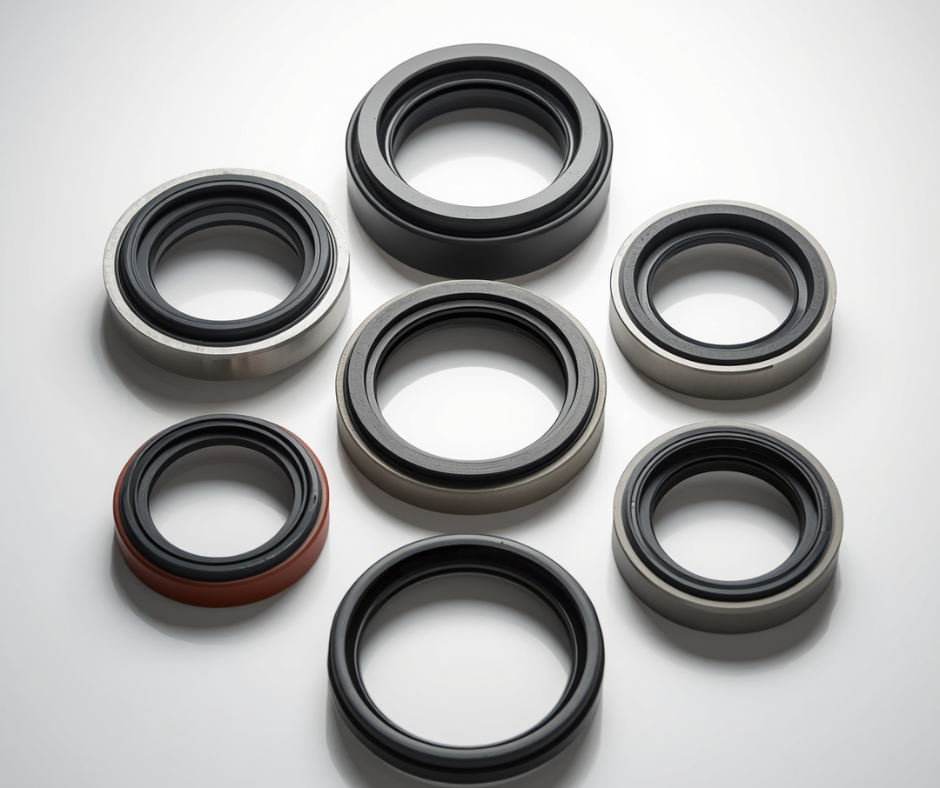
4. Mechanical Stress
Will the gasket experience vibration, movement, or thermal expansion? Some materials are more flexible and accommodating than others.
5. Flange Surface Condition
What is the condition of the mating surfaces? Rough or damaged surfaces may require softer, more conformable materials.
6. Regulatory Requirements
Are there industry standards or regulatory requirements the gasket must meet? (e.g., food-grade, fire-safe, or environmental certifications).
Common Gasket Materials and Their Applications
🔵 Rubber (Nitrile, EPDM, Neoprene, Silicone)
Rubber gaskets are versatile, flexible, and cost-effective. They are ideal for applications requiring flexibility and a good seal on irregular surfaces.
Best Applications: Automotive, plumbing, HVAC, general industrial sealing.
🟢 Cork & Cork Composites
Cork gaskets are made from natural cork combined with rubber or synthetic binders. They offer excellent compressibility and conformability.
Best Applications: Engine valve covers, oil pans, transmission cases, and equipment covers.
🟡 Cellulose & Fiber Gaskets
Cellulose and fiber gaskets are made from plant-based fibers combined with binders. They are economical and suitable for general-purpose applications.
Best Applications: Water pumps, thermostats, and general-purpose sealing.
🔴 Aramid Fiber (Kevlar) Composites
Aramid fiber gaskets offer excellent heat resistance, strength, and durability. They are ideal for high-temperature and high-pressure applications.
Best Applications: Exhaust systems, turbochargers, high-temperature industrial applications.
⚪ PTFE (Teflon)
PTFE is a high-performance material with exceptional chemical resistance and a wide temperature range. It is virtually inert to most chemicals.
Best Applications: Chemical processing, pharmaceutical, food processing, and aggressive chemical environments.
🟣 Metal & Spiral Wound Gaskets
Metal gaskets are made from stainless steel, copper, or other metals. Spiral wound gaskets combine metal and filler materials for superior sealing performance.
Best Applications: High-pressure steam, oil & gas pipelines, heat exchangers, pressure vessels.
Gasket Material Comparison Table
| Material | Temperature Range | Pressure Rating | Chemical Resistance | Best Applications |
|---|---|---|---|---|
| NBR (Nitrile) | -40°C to +120°C | Moderate | Good (petroleum fluids) | Automotive, oil seals |
| EPDM | -40°C to +130°C | Moderate | Excellent (water, brake fluid) | Water systems, brakes |
| Silicone | -60°C to +180°C | Low to moderate | Good (food-grade) | Food processing, medical |
| Aramid Fiber | -40°C to +200°C | High | Good | Exhaust, high-temp |
| PTFE | -200°C to +260°C | Wide range | Excellent (all chemicals) | Chemical processing |
| Spiral Wound | -200°C to +800°C | Very high | Excellent | Oil & gas, steam |
Specialty Gasket Materials
Some applications require specialized gasket materials:
- Graphite Gaskets: Excellent for high-temperature applications (up to 450°C in oxidizing environments, 3000°C in inert atmospheres).
- Expanded PTFE: More conformable than standard PTFE, ideal for damaged flanges.
- Compressed Fiber: Suitable for general industrial applications with moderate temperature and pressure.
- Kammprofile Gaskets: Metal core with soft facing; combine strength with excellent sealing performance.
Common Gasket Selection Mistakes to Avoid
✅ Best Practices
- Always check temperature ratings
- Verify chemical compatibility
- Consider pressure requirements
- Inspect flange condition
- Follow torque specifications
- Use correct gasket thickness
❌ Common Mistakes
- Choosing by price only
- Ignoring temperature limits
- Using incompatible materials
- Over-tightening bolts
- Reusing old gaskets
- Not considering flange condition
Installation Best Practices
Even the best gasket material will fail if installed incorrectly. Follow these essential tips:
- Clean the flanges: Remove all old gasket material and debris.
- Inspect for damage: Check for scratches, pitting, or warping.
- Use the correct thickness: Ensure the gasket is the right size for the application.
- Apply proper torque: Use a torque wrench and follow manufacturer specifications.
- Torque in sequence: Use a star or cross pattern for even compression.
- Re-torque after first heat cycle: Many gaskets require re-torquing after initial thermal cycling.
🔧 Pro Tip: Always use the manufacturer's recommended torque specifications. Over-torquing can damage the gasket and flanges, while under-torquing can lead to leaks.
Application-Specific Recommendations
Automotive Engine Gaskets
Modern engines require high-performance gaskets that can withstand extreme temperatures and pressures. Multi-layer steel (MLS) and aramid fiber composites are common choices.
Industrial Piping Gaskets
Process piping often uses spiral wound, PTFE, or compressed fiber gaskets depending on the fluid, temperature, and pressure conditions.
Food & Beverage Applications
Food-grade materials like FDA-compliant silicone, EPDM, or PTFE are required for sanitary applications.
High-Temperature Applications
Graphite, mica, and metal gaskets are preferred for high-temperature environments.
Need Help Choosing the Right Gasket Material?
Selecting the perfect gasket material doesn't have to be complicated. Our team of experts can help you identify the ideal material for your specific application—whether it's a standard industrial gasket or a custom-engineered solution.
📞 Call us: +971 5037 56766
✉️ Email: hasnain@hamzaoilseals.com
Request a Quote →